
Beyond Reality: Exploring the Most Audacious Concept Cars in Automotive History
The automotive industry is currently obsessed with “realistic” design previews—vehicles that look 95% like the production models currently rolling off assembly lines. While these serve a purpose for shareholders and supply chain efficiency, they lack the soul, the audacity, and the sheer insanity that define true innovation. As someone who has spent a decade analyzing vehicle architecture and design language, I can tell you that the most significant leaps in engineering didn’t come from cautious market research. They came from the “impossible” projects: the craziest concept cars ever made.
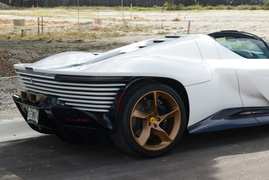
When we talk about automotive design innovation, we are essentially discussing the evolution of human imagination. Many of the most iconic concept cars were never intended for a dealership showroom; they were manifesto statements. They were built to challenge the status quo, test the limits of aerodynamics, and occasionally, simply to see if a manufacturer could get away with building something utterly absurd.
Why Radical Concept Cars Matter in 2025
In an era dominated by electric vehicle (EV) efficiency and software-defined platforms, the concept car has undergone a transformation. Today, manufacturers often use these prototypes to highlight autonomous driving technology, sustainable interior materials, and advanced battery management systems. However, looking back at the history of the automobile, the most intriguing vehicles are those that favored avant-garde aesthetics over pragmatic utility.
These high-stakes prototypes represent the industry’s “blue-sky” thinking. For automotive engineers, these projects provide a sandbox to test high-performance automotive parts and cutting-edge propulsion systems. For investors, these models represent the intellectual property and R&D capability of a brand. Understanding the lineage of these vehicles is essential for anyone interested in the future of car manufacturing.
The Anatomy of Automotive Madness
What separates a memorable prototype from a total failure? It comes down to intent. Some of the craziest concept cars ever made were designed specifically to be conversation starters at the Geneva or Detroit Auto Shows. Others were genuine, albeit misguided, attempts to solve engineering problems that didn’t exist.
Consider the mid-century obsession with gas turbine engines. Several manufacturers developed vehicles that looked more like jet fighters than passenger cars. While these were technically impractical due to heat management and fuel consumption, they proved that automotive design was not bound by the limitations of the internal combustion engine. This spirit of exploration is exactly what keeps the industry moving forward today.
Engineering Limits and Performance Thresholds
If you are a collector or an investor looking into the world of automotive memorabilia, you likely already understand that these one-off vehicles occupy a unique space in market valuation. High-end automotive restoration and the market for rare vehicle prototypes have seen a massive surge in interest. From an investment perspective, these concept vehicles are the “fine art” of the motor world.
When we analyze the engineering of these machines, we often look at specific variables:
Aerodynamic Efficiency: How designers manipulated drag coefficients long before CFD (Computational Fluid Dynamics) software.
Materials Science: The early integration of carbon fiber, reinforced plastics, and lightweight alloys.
Human-Machine Interface (HMI): Early, often bizarre attempts to reinvent the steering wheel, gauge clusters, and control systems.
When Design Houses Go Rogue
The most “out there” concepts often come from independent design houses like Bertone, Pininfarina, or Italdesign. Unencumbered by the strict safety regulations of mass-market production, these designers were free to explore geometric shapes, gull-wing configurations, and interior layouts that defied conventional ergonomics.
These firms weren’t just building cars; they were predicting the future. While many of the specific features—like transparent cockpits or joystick steering—never made it to your daily driver, the philosophy behind them often filtered down into modern luxury vehicle design.
Sustainability Meets the Surreal
Looking at 2025 and beyond, the narrative has shifted toward modular platforms and sustainable luxury. Even within this structured environment, we are seeing a resurgence of the “crazy” concept. We now see vehicles that are essentially rolling lounge spaces, with AI-driven cabin experiences and recycled oceanic plastics integrated into the dashboard.
The craziest concept cars ever made remind us that the road ahead shouldn’t be boring. Whether it’s through advancements in solid-state batteries or the integration of augmented reality into the windshield, the goal remains the same: to redefine the personal mobility experience.
Investing in the Future of Automotive Design
For those engaged in the automotive sector—whether as a professional in vehicle logistics, a design student, or a high-end collector—understanding these prototypes provides a competitive edge. It allows you to anticipate trends before they hit the mass market. If you are tracking the evolution of high-performance automotive parts or looking to secure a foothold in the future of electric mobility, it is time to look beyond the standard market offerings.
The vehicles that were “too mad” to be sold are often the ones that dictate where the industry goes next. They challenge our perceptions of what a car can be and push us to demand more from the manufacturers we choose to support.
Are you ready to explore the intersection of high-concept design and next-generation performance? Whether you are evaluating the latest automotive innovations or looking to invest in the next wave of industry-shifting technology, the path forward is clear: innovation rewards the bold. Connect with our team today to discuss how these legendary concepts are influencing the next generation of performance vehicles and how you can position yourself at the forefront of this automotive revolution.