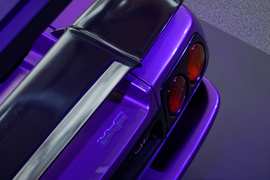

Yangwang U9 Shatters Speed Records: A New Era for Electric Supercars Dawns
The landscape of automotive performance has been irrevocably altered. On September 14th, 2025, a date etched into the annals of speed, a vehicle from China, a nation increasingly asserting its dominance in advanced engineering, not only challenged but fundamentally redefined the pinnacle of automotive velocity. The Yangwang U9, a marvel of electric propulsion and aerodynamic sophistication, achieved a staggering 308.4 miles per hour, a feat that not only dethroned the long-reigning Bugatti Chiron Super Sport 300+ but also sent a seismic shockwave through the global supercar and hypercar industry. This wasn’t just a new record; it was a declaration of intent, a definitive signal that the era of internal combustion engine supremacy in the ultimate speed arena is rapidly drawing to a close, ushering in a breathtaking new chapter for electric vehicles.
For over six years, the 300 mph barrier had been the exclusive playground of a select few titans of engineering. The Bugatti Chiron Super Sport 300+, with its awe-inspiring 304.8 mph run, had become synonymous with the absolute limit of what was thought possible for a road-legal production car. However, on the hallowed high-speed test oval at ATP Papenburg, under the clear skies of Germany, German racing driver Marc Basseng, at the wheel of the Yangwang U9 Xtreme, showcased a level of audacity and engineering prowess that left the automotive world stunned. Following an initial, still incredibly impressive, 290 mph “wobble,” Basseng, demonstrating nerves of steel and an unshakeable faith in the machine beneath him, pushed the Yangwang U9 Xtreme to its absolute limit. The result? A monumental 308.4 mph, a number that resonated globally, signifying not just a new world record, but a profound paradigm shift. This accomplishment solidifies the Yangwang U9’s place in automotive history, not merely as a fast car, but as a groundbreaking testament to the unbridled potential of electric power.
The sheer performance metrics of the Yangwang U9 Xtreme are, frankly, mind-boggling. It’s not just about a higher top speed; it’s about the underlying technological leap it represents. Producing a colossal 2,978 brake horsepower (bhp) from its quartet of meticulously engineered electric motors, each capable of spinning up to an astonishing 30,000 revolutions per minute (rpm), the U9 Xtreme’s power output more than doubles that of its “standard” U9 sibling (1,288 bhp). This translates to an electrifying power-to-weight ratio of 1,217 bhp per tonne, a figure that renders many of the most potent combustion-engine supercars seemingly anemic in comparison. Furthermore, the Yangwang U9 is the first production car to ever utilize a 1,200-volt (V) architecture. This elevated voltage is absolutely critical to efficiently delivering such immense power to the motors, allowing for higher current flow and reduced energy loss. The U9 can handle an astounding current of up to 1,000 amperes (A), a capacity that is akin to that of some electric trains, highlighting the sheer scale of the electrical system powering this hypercar. This advancement in electrical architecture is a key enabler for future electric hypercar development, paving the way for even more extreme performance and faster charging capabilities.
However, surpassing Bugatti on their own turf, in the ultimate speed contest, appears to have been merely the opening salvo in Yangwang’s ambitious campaign. The U9’s dominance extends beyond straight-line acceleration and top speed. It has already shattered the lap record for the fastest production electric sports car around the legendary Nürburgring Nordschleife, completing the daunting 12.9-mile circuit in an astonishing 6 minutes and 59.16 seconds. This remarkable lap time underscores the U9’s exceptional handling, aerodynamic efficiency, and the sophisticated interplay of its advanced traction control and torque vectoring systems. The Nürburgring, often considered the ultimate proving ground for automotive performance, has a new benchmark set by an electric challenger. The next stated target for Yangwang? Breaking the 500 kilometers per hour (kph) barrier, which equates to approximately 311 mph. With the current trajectory and the demonstrated capabilities of the U9, this ambitious goal seems not just plausible, but perhaps even imminent. The world, as Yangwang has effectively declared, should be put on notice.
The implications of the Yangwang U9’s achievements ripple far beyond mere bragging rights. For years, the narrative in the hypercar segment has been dominated by a relentless pursuit of horsepower figures, often achieved through complex turbocharged V8s, V12s, or even W16 engines. While these engineering marvels have produced incredible machines, they also come with inherent limitations in terms of efficiency, emissions, and packaging. The electric revolution, spearheaded by innovations like those found in the Yangwang U9, offers a fundamentally different path to extreme performance. The instant torque delivery of electric motors, coupled with the ability to precisely control power distribution to each wheel, opens up new dimensions of acceleration and agility. Furthermore, the environmental benefits and the potential for cleaner, more sustainable high-performance motoring are undeniable.
The electric supercar market, once a nascent and somewhat experimental segment, is now firmly established and rapidly evolving. While pioneers like the Rimac Nevera have already demonstrated the incredible potential of all-electric hypercars, the Yangwang U9’s record-breaking run signifies a new level of global competition. Companies from established automotive giants venturing into electrification to agile new EV startups are all vying for a piece of this lucrative and prestigious market. The Yangwang U9 price point, while not yet definitively disclosed for the Xtreme variant, is expected to reflect its cutting-edge technology and world-beating performance, likely placing it in the multi-million dollar bracket, competing directly with established players.
The implications for the broader automotive industry are equally profound. The advancements in battery technology, motor efficiency, and power electronics demonstrated by the U9 will inevitably trickle down to more accessible segments. Consumers can expect to see more powerful, more efficient, and more engaging electric vehicles across the board in the coming years. This record is not just about a single car; it’s about the acceleration of innovation across the entire automotive spectrum. The push for performance electric cars is intensifying, driven by both consumer demand and regulatory pressures.
For consumers and enthusiasts in the United States, this news is particularly significant. The fastest electric car in the world is now a reality, and its existence will undoubtedly fuel interest and demand for high-performance EVs. While the Yangwang U9 might initially be a limited-production halo car, its impact on the EV market trends will be substantial. We are witnessing a period of unprecedented disruption and innovation in the automotive world. For those seeking the absolute pinnacle of automotive engineering and performance, the new electric hypercars entering the fray are becoming increasingly compelling.
The pursuit of speed has always been a driving force in automotive development. From the earliest days of the automobile, engineers and enthusiasts have been captivated by the challenge of going faster. The Yangwang U9’s achievement is the latest chapter in this long and storied history. It highlights the incredible progress made in electric vehicle technology and its ability to challenge, and in this case, surpass, the established benchmarks of internal combustion engine performance. This momentous occasion serves as a powerful reminder that the future of automotive performance is undeniably electric.
The question now becomes: what comes next? With the 300 mph barrier broken by an electric vehicle, and the 500 kph target firmly in Yangwang’s sights, the race for automotive supremacy has entered a new and exhilarating phase. This competition is not just about raw speed; it’s about pushing the boundaries of technology, sustainability, and human ingenuity. As industry experts, we are witnessing a transformative period where the lines between traditional automotive performance and the cutting edge of electric propulsion are blurring. The Yangwang U9 is a harbinger of a future where electric vehicles are not just an alternative, but the undisputed leaders in performance.
Are you ready to experience the future of automotive performance? The world of high-performance EVs is rapidly evolving, and staying informed is key. Explore the latest advancements and discover how these groundbreaking technologies are shaping the cars of tomorrow.